

Dear Reader,
The first law review article I published was about secondary copyright liability, so this one feels a little bit personal. When I wrote Choosing an Internet Shaped by Freedom, Aaron Swartz was still alive. Back then, there was reason to hope that the Court and Congress would co-navigate the overlapping public interests in a free and open internet addressed by the Digital Millennium Copyright Act (“DMCA”), the Telecom Law of 1996, and Net Neutrality Rules.
With Cox v. Sony ending the DMCA as we know it, that hopeful era is officially over. In Cox, the Court seemed to imply that the judiciary may destroy any reform Congress might make to the DMCA, should Congress try to save it. Cox reads as though Congress was to blame for relying upon the Court’s maintenance of common law case law, which is like blaming Congress for assuming the Court would manage itself.
In other recent cases, the Court conversely attacked Congress for overreaching on separation of powers bases. According to the Court, Congress is damned if it legislates and damned if it doesn’t. But the constitution designates Congress as the branch of government charged with vesting the judicial power in one Supreme Court, and so Congress could theoretically tighten the screws on the Court. The Court in Cox and other similar cases is, therefore, tempting permanent, irreversible changes to its power and structure through statutory reform.
Congress may find that it cannot save the DMCA by merely defining what secondary liability it deems appropriate, because secondary liability is derived from the common law the Court attacked in Cox. The Court’s “Originalists” have no basis for attacking the common law that pre-exists the Patent & Copyright Clause. The Patent & Copyright Clause originally derived from the Case and Statute of Monopolies in England that sought to secure the common law right of life through statute and the writ of trespass on the case.
Following in this tradition, Phillis Wheatley vindicated her common law rights in her famous trial in 1772 Boston. According to the resulting attestation that was published in her books, she won the common law right to take credit for writing a book that later became world famous, launching her global career as a revolutionary author. Wheatley’s common law right of life, as vindicated in Boston, and secured by the Stationer’s Company in London, provided critical sidelights in the ongoing common law trespass on the case disputes then occurring in the English cases Millar v. Taylor and Donaldson v. Becket.
The very origin of copyright law in America is the common law. Therefore, it was natural for the DMCA to presuppose that the Court would continue to adjudicate secondary common law copyright infringement claims. Thus, the DMCA created a safe-harbor to internet companies as long as they maintained a compliant take-down system when copyright owners alerted the companies of infringing material posted or shared by users. Cox v. Sony demolished the potential of other bases for secondary copyright litigation beyond the cases already decided.
The DMCA’s safe-harbor relied upon the idea that the Court would allow broad litigation of common law secondary liability. Now, without the incentive created by potential litigation at common law, the DMCA safe-harbor appears to be impotent. The Court appeared to circumvent the DMCA by artificially limiting common law secondary liability to two circumstances: (1) when the product or service sold is only useful for infringement; or (2) when a party induces another to commit infringement.
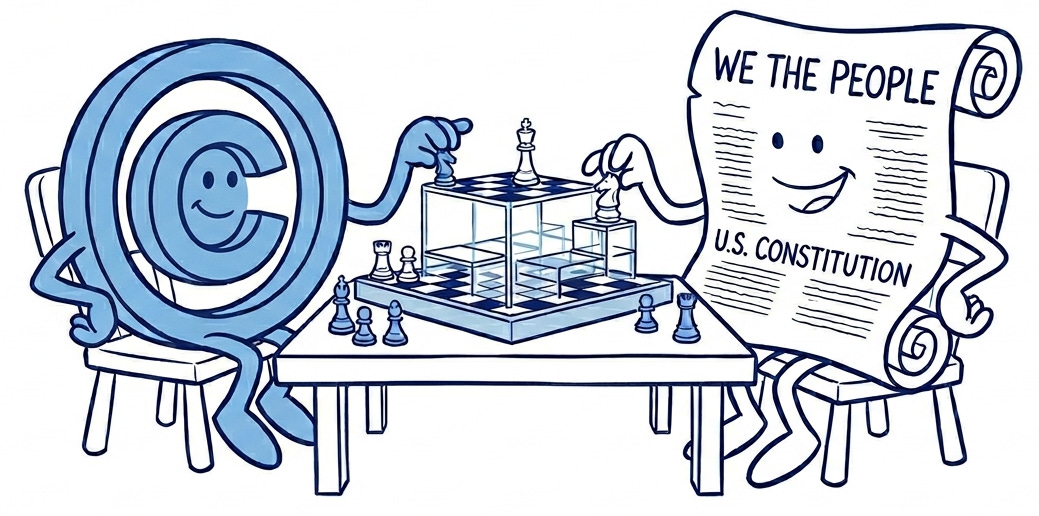
Many lawyers, like myself, are paid to explain to clients what this practically means regarding take-down procedures and liability risks. But, here, the common law foundations of the statutory law are ruptured. Some are guessing that this will result in more suits against individual internet users. But this only takes into account the copyright layer of internet regulation. There are at least two other layers of 3-D chess being played here.
Cox could be extended to upend Section 230 of the Telecom Law (the legal safe harbor that was said to have created the internet). Logically, this is possible, but unlikely in real politick. A more likely change that Cox portends is a further drift from the common law decision in Kyllo v. United States, toward the dragnet internet surveillance systems first exposed by Edward Snowden.
This is not to say that the Court’s current drift is legal positivist or dogmatically anti-common law. As much as Justice Thomas artificially denied the common law in Cox, in other opinions Thomas waxed poetic about common law common carrier bases to expand upon the regulation of internet providers. His real ambition for common law bases for internet regulation appears to coincide with Brenden Carr’s recent threats of stripping television companies of their broadcast licenses.
These ambitions actually confuse the American common law with British feudalism—a topic recently explored by Legal Historian Holly Brewer and myself. According to Thomas v. Sorrell and Godden v. Hales, restrictions on licenses, including broadcast licenses, may be dispensed with by the Crown in England, because violations of licenses are human made wrongs or artificial crimes (malum prohibitum). This line of cases arose from a genre that caused the English Civil War, was intended to be corrected by intellectual property common law rights of life (the exact portion of common law discussed here),[1] and yet was erroneously repeated in a way that caused even the royalists to admit that the king’s wild dispensations of the law violated the Rule of Law.[2]
In England, the line of licensure cases that culminated in Godden is styled as common law, but in America it is considered illegitimate feudal law. The idea that Justice Thomas can now, at this late date, reintroduce the paradox of common law feudalism to America as though it had always existed in America is a travesty of travesties. The idea that the FCC can use royal dispensation as a basis for reshaping the internet according to the political ambitions of the current party in power potentially upends the entire concept of public property vindicated in Carol Rose’s idea about The Comedy of the Commons.
The very bases of administrative regulation in Rose’s theories are being challenged, ruined, and reshaped by a radical Supreme Court. The front-lines of the Court’s royalist leanings are wonderfully covered by Holly Brewer’s reporting and research regarding cases like Trump v. United States. Here, in this article and in general at Everything at Issue, I hope to provide useful sidelights on such front-line efforts by giving in depth review of what Justice Story coined the metaphysics of the law. In this, I consciously follow in the footsteps of Phillis Wheatley who similarly illuminated James Otis’s front-lines approach in Paxton’s Case from her seat in “the Bottomless Profound”[3] whence she gave the revolution life through copyright law’s origins in her very own common law right of life.
Yours Respectfully,
Joshua J. Schroeder, Esq.
[1] 3 Edward Coke, Institutes 181–83.
[2] Sir John Fyneux on Dispensations (1495), Sir Walter Raleigh’s Case (1605), Thomas v. Sorrell (1674), Godden v. Hales (1686), and Sir Thomas Grantham’s Case (1687), 3 Mod. 120, in John Baker, Sources of English Legal History: Public Law to 1750, at 91–100, 453 (2024); see Holly Brewer, Creating a Common Law of Slavery for England and Its New World Empire, 39 L. & Hist. Rev. 765, 804 (2021).
[3] Kenneth Silverman, Four New Letters by Phillis Wheatley, 8 Early Am. Lit. 257, 264 (1974).