


Dear Reader,
Everyone knows Trump ran for office in 2024 to avoid criminal liability for several alleged crimes and one successful 34-count criminal conviction in a New York State Court. But this was only a temporary 4-year reprieve for him. The question of Trump’s looming retirement is probably top of mind for his new Attorney General Todd Blanche who represented Trump in his “hush money” trial, for which he is convicted.
Assuming Trump leaves office in 2028, the President cannot pardon himself for State crimes. Moreover, current precedent holds that accepting a pardon requires the beneficiary to admit that the crimes pardoned were committed. Should Trump pardon himself and anyone who came within 200 feet of the Oval Office, as Trump jokingly promised to do, he and his other pardon beneficiaries may — by taking the pardons — confess to elements of prosecutable State crimes.
This ordinary function of the federalist system is a problem for the several high profile unitary-power theorists who interpreted the President’s Pardon Power as a hold-over of kingly powers in the President. They have not been able to explain how the President’s pardons could completely absolve him of all criminal liability as a king’s pardon would do in England. The existence of the federal system, in which only State Governors can pardon individuals for committing State crimes, is a persistent problem for defenders of the unitary executive theory.
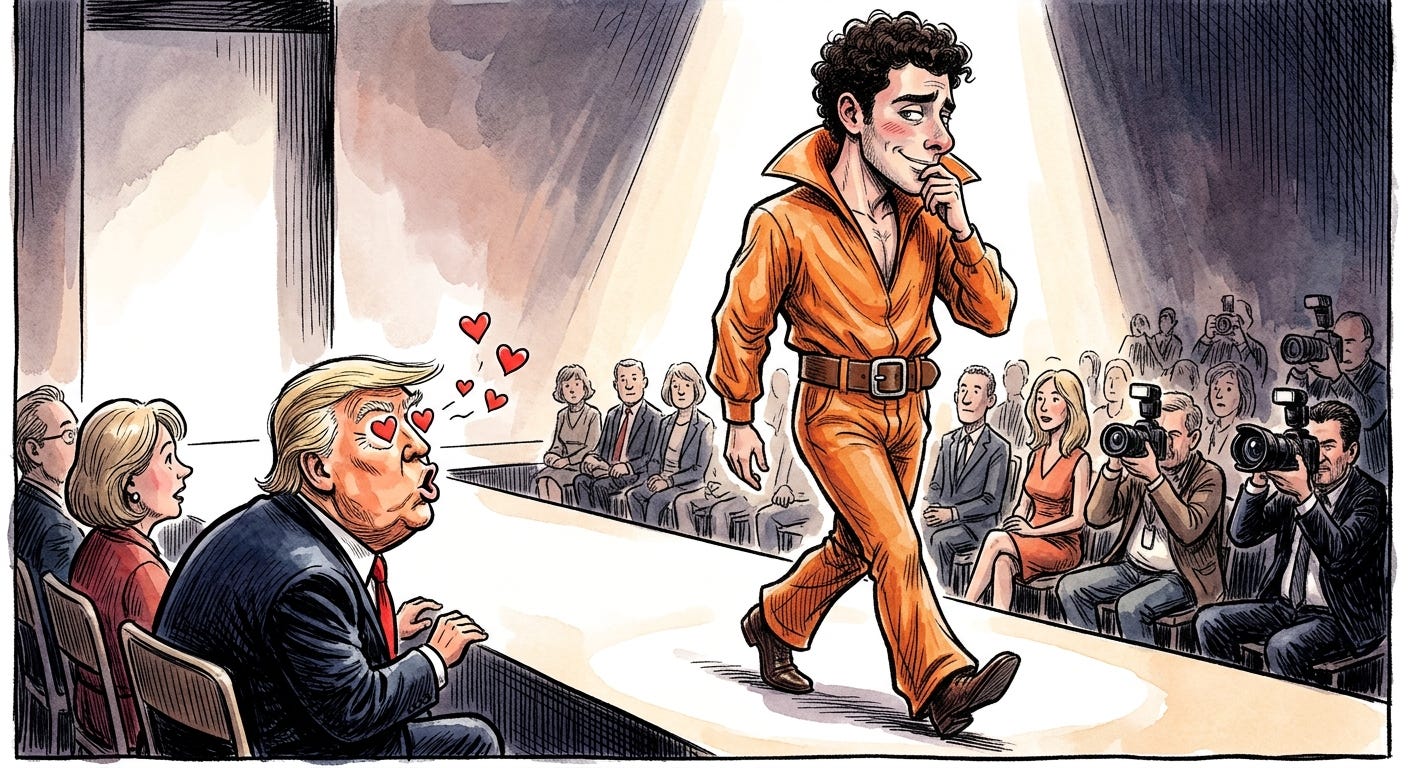
Enter Luigi Mangione’s defense team.
Luigi Mangione’s motion to dismiss his State criminal case for violating the Double Jeopardy Clause of the Fifth Amendment is a loophole Trump and the unitary executive theorists seem to believe is inherent in the President’s Pardon Power. Mangione’s attorneys accused the State and federal governments of colluding as one sovereign to double-charge Mangione for his crimes. If the argument is successful, federal prosecutions may protect accused individuals from facing State prosecutions by charging individuals similarly — supercharging the Pardon Power.
Mangione’s defense team did not reveal whether the DOJ might have purposely charged crimes designed to preclude State prosecutions. Attorney General Todd Blanche may have a vested interest in serving the President as his private client, as he had in the past, by fashioning an exit strategy for him that avoids criminal liability. Providing this strategy could be extremely lucrative in the near future for Blanche or his associates.
None of this is likely to change Mangione’s general fate — he is going to prison. However, it is possible that Mangione’s defense team got a sweetheart deal for their client, like Ghislaine Maxwell’s, that the public may only be able to speculate about in the future. If it exists, the moment to have secured a sweetheart deal for Mangione would have been at the charging stage, which is where the federal government made choices that might have practically double-crossed New York State to effectively protect Mangione from State prosecutions.
If such a deal were to exist it would likely exist solely in the realm of conspiracy theories. Yet, given the reality of Maxwell’s high profile deal, if Mangione receives more comfortable lodgings than someone like him usually would, the public might reasonably suspect Mangione’s defense team secured a deal for him. In a previous era, when the DOJ was considered independent of the President, the potentiality of this kind of secret sweetheart deal would have been unthinkable.
But these days, the President’s private criminal defense lawyer Attorney General Todd Blanche will almost certainly perceive the following structural reality. Presidents and top officials can be charged for federal crimes while in office, even though Office of Legal Counsel memos say the President should not be charged while in office. Double jeopardy attaches when a federal court formally accepts a defendant’s guilty plea, the jury is sworn in, or in cases of bench trials when the first witness is sworn in. The only practical consequence of pardoning oneself is that a self-pardoning President could face impeachment, removal, and State criminal charges for the same or related crimes for which the President pardoned himself at the federal level.
If a President were to charge himself with federal crimes designed to preclude State prosecutions via the Fifth Amendment and then pardon himself, theoretically he could make his pardon preclude State prosecutions to ensure a comfortable retirement. If Mangione were to argue successfully in New York State Court that double jeopardy precludes State prosecutions, the precedent may become valuable in Trump’s later exit strategy. Unitary executive theorists could, then, theoretically justify their view that Article II contains royal prerogative powers traditionally thought to have been excluded in the United States.
Provided Trump’s exit occurs after the Democrats win the next presidential election, there will likely be several States, especially New York State, ready to work with the federal government to get Trump for his alleged crimes. This makes the cooperative State and federal prosecution of Mangione a potentially good test ground for Trump’s exit. However, should Congress somehow become more willing to impeach and remove Trump, the same avenue may not be as straight forward for the President.
Yours Cordially,
Joshua J. Schroeder, Esq.